
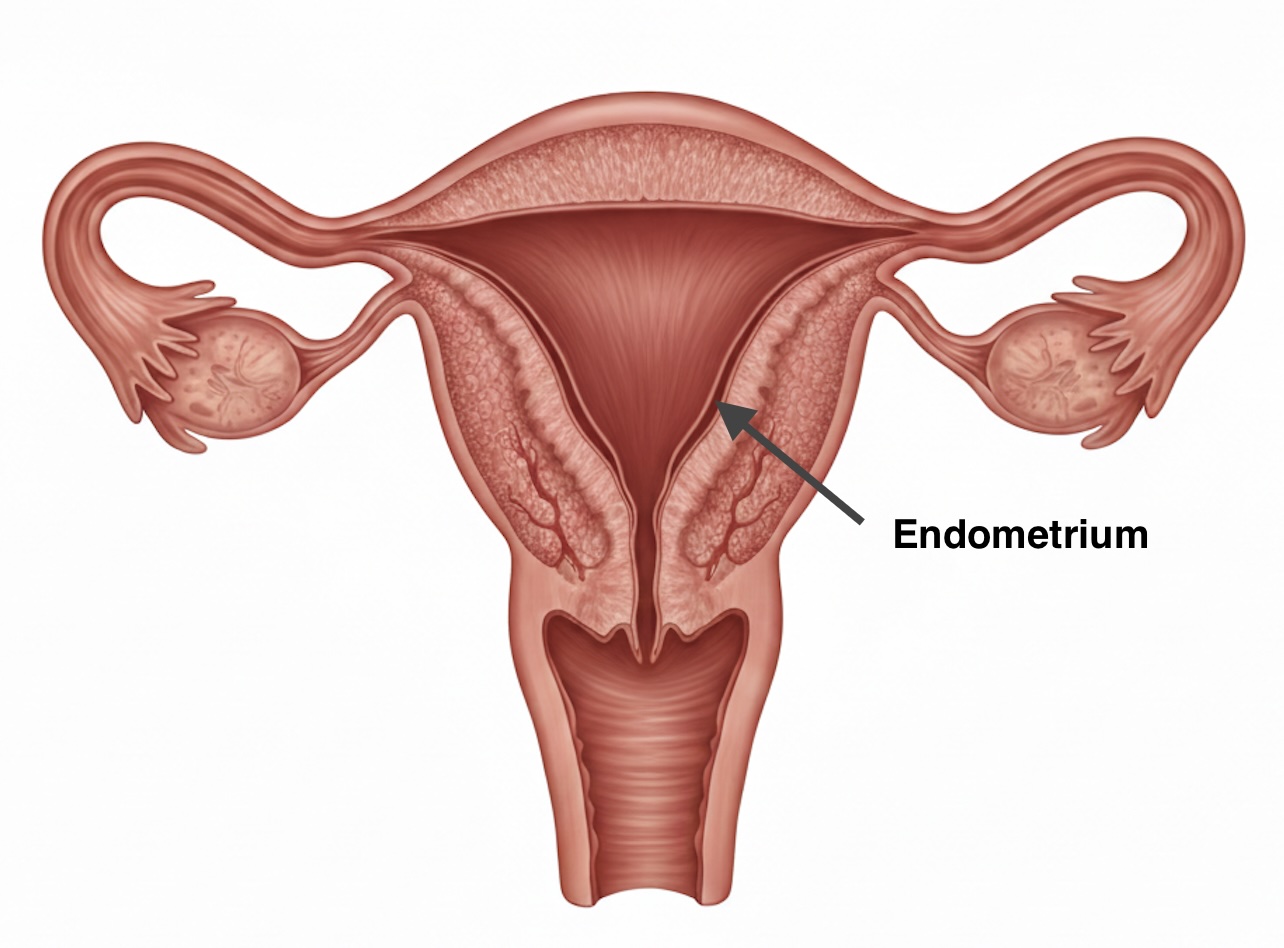
The inner lining of the uterus is called the endometrium and this is the lining that is shed during a woman’s period.
Normally the endometrium should only be present in the uterus but in women with endometriosis a similar but abnormal lining is also found in other places such as the ovaries, fallopian tubes, and other areas of the pelvis near the bladder or rectum. Rarely it can also be found in more unusual places such as in the abdomen, intestines or theoretically any place in the body.
Women with endometriosis can have very painful periods because these endometrial lesions respond to hormones just like the endometrium in the uterus does. Because these lesions cannot exit the body like normal period blood it causes local inflammation and scarring resulting in pain.

Your physician will be able to make an assessment based on medical history, clinical examination and ultrasound examination. In some cases further investigation may be necessary with MRI or laparoscopic surgery to make the diagnosis.
Unfortunately, endometriosis is often underdiagnosed because period pain has been normalised. However, if your pain is severe or interferes with your daily life, you should contact a gynecologist. Even when the diagnosis is not entirely clear, treatment can still be started.
Women with endometriosis may have no symptoms at all but many complain of severe menstrual cramps and pelvic pain. Unfortunately many women suffer in silence for many years before getting diagnosed. The reason endometriosis can cause pain problems is quite complex but involves inflammation and scarring surrounding the endometriosis tissue and surrounding nerves becoming extra sensitive to painful stimuli.
Many women with endometriosis have no problem getting pregnant however some may experience issues with infertility. In this case it is a good idea to consult an ob/gyn specialist to receive extra help. Research shows that women with endometriosis are able to conceive just as well as women without the diagnosis however women with endometriosis may be more likely to require additional medical assistance to conceive.
Endometriosis is a chronic disease and cannot be cured however there are many good treatment options available to manage the disease and symptoms.
Painkillers are often used to ease the symptoms including paracetamol and anti-inflammatory drugs.
Contraceptive pills or other forms of hormonal therapy aimed at decreasing the endometriosis disease activity and pain may be used.
In certain cases surgery may be used to remove endometriosis tissue but this is usually reserved for very specific cases when the benefits are deemed to outweigh the risks.


